
Living in Medium-Sized Apartment Buildings

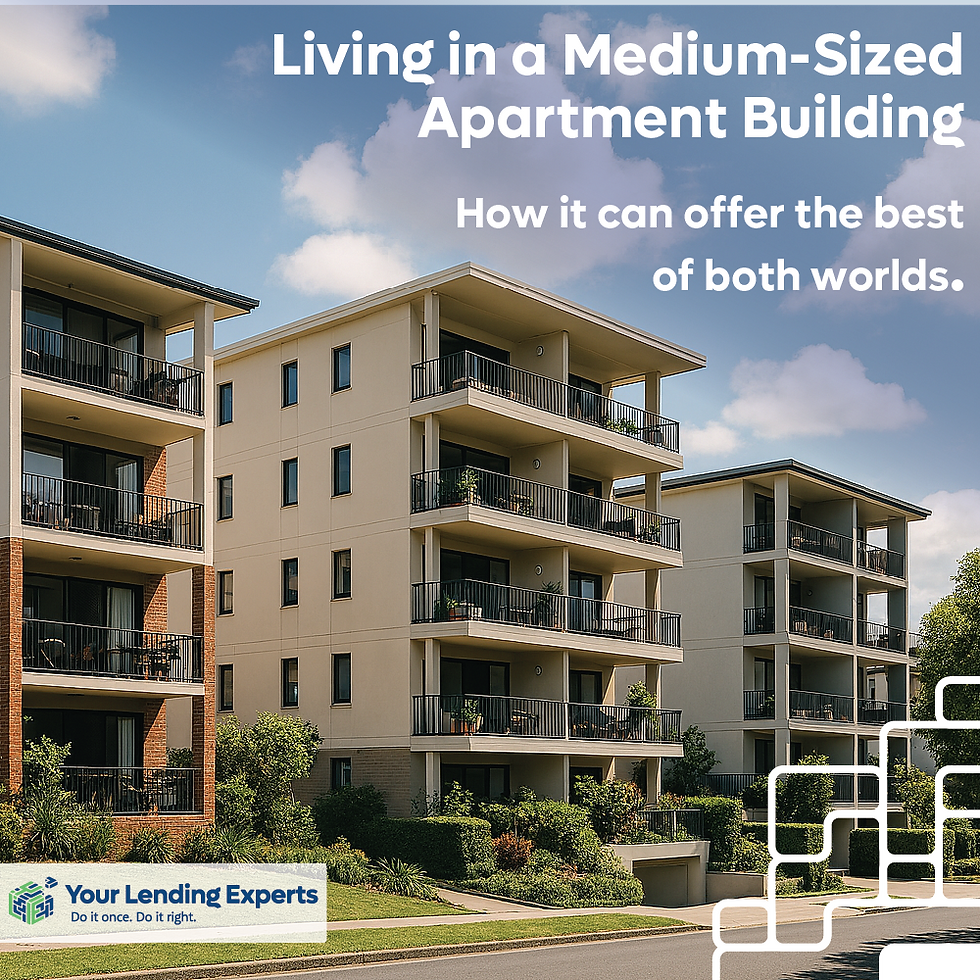
Medium‑sized apartment buildings—typically around 30 to 50 residences—are becoming increasingly popular across Queensland’s growing urban and coastal centres. For many buyers, they strike the perfect balance between community living and personal space. They’re large enough to offer useful amenities, yet small enough to avoid the hustle and anonymity of big high‑rise towers.
If you’re thinking of purchasing an apartment, here’s what you need to know about living harmoniously in a building with around 40 residences, and the key lifestyle, financial, and property value factors to consider.
Why Living in Medium-Sized Apartment Building Can Offer the Best of Both Worlds
1. A Balanced Community Feel
You get enough neighbours to create a friendly, vibrant environment—without feeling overwhelmed or overcrowded.
2. Manageable Density
Medium‑sized buildings usually offer:
Less noise than large towers
More relaxed shared spaces
More stable owner-occupier communities
3. Access to Useful Amenities
Many include features like:
A small gym
Rooftop area or residents' lounge
Secure underground parking
Shared landscaped zones
These amenities add convenience without blowing out body corporate fees.
Financial Pros and Cons of Living in a Medium‑Sized Complex
✔ Financial Pros
Reasonable body corporate fees
Strong market demand for mid‑sized buildings
Lower long-term maintenance burden per owner
Solid rental appeal
✘ Financial Cons
More amenities mean ongoing costs
Risk of special levies for major repairs
Moderate competition if multiple similar units list at once
How Medium‑Sized Buildings Can Impact Property Value
Property value isn’t just about location and square metres—building size and community dynamics play a major role too. Here’s how a building with around 40 residences typically influences value over time.
✔ Positive Impacts on Property Value
1. Strong Buyer Demand for “Not Too Big, Not Too Small”
Medium-sized buildings appeal to a broad range of buyers including downsizers, young professionals, investors, and small families. This improves resale competitiveness.
2. Better Long-Term Maintenance and Upkeep
With more owners contributing to costs than tiny blocks—but without the burden of expensive high‑rise amenities—these buildings tend to maintain healthy sinking funds and proactive maintenance, which supports long-term value.
3. Desirable Community Environment
Buildings of this size often strike a balance between privacy and community. A well‑managed, friendly, quiet environment enhances a property’s reputation, which can boost demand and pricing.
4. Limited Oversupply Risk
Unlike big towers where dozens of units may hit the market at once, medium buildings reduce direct competition. Unique layouts and fewer identical floorplans also make properties feel more distinctive.
5. Lower Wear and Tear on Facilities
Shared amenities aren’t used as intensively as in large complexes, helping them stay in better condition for longer—supporting both rental and resale value.
✘ Potential Negative Impacts on Property Value
1. Outdated Shared Facilities
If amenities become outdated or neglected, this can affect valuation, especially in competitive inner-city suburbs.
2. Higher Per‑Owner Cost for Major Upgrades
While costs are more spread out than in small blocks, major repairs can still require sizeable contributions from each owner.
3. Competition Within the Building
If several similar apartments come up for sale at the same time, it can soften prices temporarily—though this is far less of an issue than in high‑rise developments.
4. Design or Age of the Building
Older or poorly designed buildings may require:
waterproofing
lift upgrades
cosmetic improvements
If these aren’t addressed, property values can stagnate.
How Living in a medium size building can affect your Lifestyle
✔ Positive Impacts
Friendly yet private community
Less crowded shared spaces
Access to practical amenities
A good balance of security and comfort
✘ Negative Impacts
More structured building by‑laws
Occasional neighbour conflicts
Shared amenities require cooperation
Tips for Living Harmoniously in a Medium‑Sized Building
Understand the by‑laws early
Keep communication respectful
Use shared spaces considerately
Participate in body corporate decisions
Be mindful of noise and shared walls
Is a Medium‑Sized Apartment Building Right for You?
Living in Medium-Sized Apartment Buildings offer an ideal mix of value, community, and comfort—making them a great option for Queensland buyers.
If you’re exploring your next purchase and want personalised guidance on lending options, loan structure, or apartment investment strategy, we are here to help.
Disclaimer: The content of this article is general in nature and is presented for informative purposes. It is not intended to constitute tax or financial advice, whether general or personal nor is it intended to imply any recommendation or opinion about a financial product. It does not take into consideration your personal situation and may not be relevant to circumstances. Before taking any action, consider your own circumstances and seek professional advice. This content is protected by copyright laws and various other intellectual property laws. It is not to be modified, reproduced or republished without prior written consent.


Comments